
Quick answer: Yes. The most common forms of glaucoma usually cause no pain and no noticeable symptoms until significant side vision has been lost. Regular eye exams that include eye pressure measurement, optic nerve imaging (OCT), and visual field testing are the only reliable way to detect glaucoma early.
Glaucoma is often called the “silent thief of sight.” For residents of Gimpo, from Gurae and Unyang to Gochon and Janggi, a busy schedule can make an eye exam easy to postpone when vision seems fine. Yet glaucoma damage is generally permanent, and early detection is what gives treatment the best chance of protecting remaining vision. This guide explains why glaucoma goes unnoticed, who should be screened, and what the tests involve.
What Is Glaucoma?
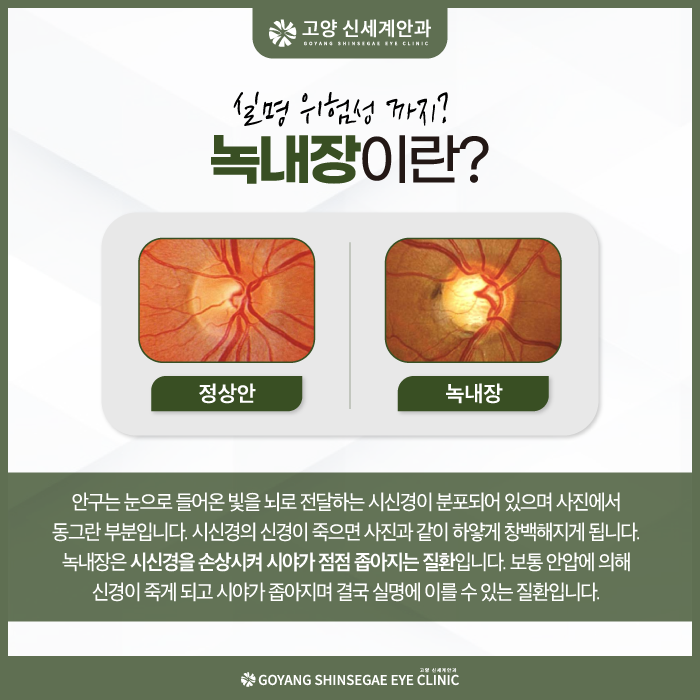
Glaucoma is a group of eye diseases that damage the optic nerve, the cable that carries visual information from the eye to the brain. Damage typically begins in the peripheral (side) vision and slowly moves inward. Elevated intraocular pressure (IOP) is the most important known risk factor, but glaucoma can develop even when eye pressure is within the normal range.
Main types of glaucoma
- Primary open-angle glaucoma: the drainage angle is open, but fluid drains less efficiently over time. Progression is slow and painless.
- Normal-tension glaucoma: optic nerve damage occurs despite normal eye pressure readings. Studies in Korea have found that a large proportion of open-angle glaucoma cases fall into this category, which is why pressure checks alone are not enough.
- Angle-closure glaucoma: the drainage angle is narrow or blocked. It can be chronic and silent, or it can cause a sudden attack with severe eye pain, headache, halos, and nausea, which is an emergency.
- Secondary glaucoma: caused by other conditions, such as inflammation, injury, steroid use, or diabetes.
Why Glaucoma Has No Early Symptoms
- Side vision is lost first. Central vision, which you use for reading and recognizing faces, often stays sharp until late.
- The brain fills in gaps. With both eyes open, one eye compensates for the other, masking blind spots.
- No pain. Open-angle and normal-tension glaucoma do not hurt.
- Slow change. Damage builds over years, so there is no clear “moment” when vision worsens.
By the time someone notices bumping into objects or missing steps, a substantial portion of the optic nerve may already be damaged.
Who Should Be Screened for Glaucoma?
Everyone benefits from periodic eye exams, but screening is especially important if you have:
- Age 40 or older, with risk increasing each decade
- A family history of glaucoma, especially a parent or sibling
- High myopia (strong nearsightedness)
- High eye pressure found at a previous exam
- Diabetes or high blood pressure, or very low blood pressure
- Long-term steroid use, including eye drops, inhalers, or creams near the eyes
- Previous eye injury
- Migraine or cold hands and feet, which have been associated with normal-tension glaucoma in some studies
What Does a Glaucoma Screening Include?
A thorough glaucoma evaluation goes beyond a single pressure reading:
Intraocular pressure (tonometry)
Measures the pressure inside the eye. Pressure can fluctuate during the day, so repeated measurements may be needed.
Optic nerve examination and fundus photography
The ophthalmologist examines the shape and color of the optic nerve head. Photos allow changes to be compared over time.
OCT (optical coherence tomography)
A non-contact scan measures the thickness of the retinal nerve fiber layer and ganglion cell layer around the optic nerve and macula. OCT can detect structural thinning before a person notices any vision loss.
Visual field test
You press a button when you see small lights appear in different areas. This maps the function of your peripheral vision and helps confirm and stage glaucoma.
Gonioscopy and corneal thickness
A special lens examines the drainage angle to distinguish open-angle from angle-closure glaucoma. Corneal thickness (pachymetry) helps interpret pressure readings.
How Often Should You Be Screened?
General guidance many ophthalmologists follow:
| Situation | Suggested interval |
|---|---|
| Age 40 to 54, no risk factors | Every 2 to 4 years |
| Age 55 to 64 | Every 1 to 3 years |
| Age 65 and older | Every 1 to 2 years |
| Family history, high myopia, diabetes, or suspicious findings | As often as your doctor advises, often yearly |
Your ophthalmologist may recommend a different schedule based on your exam results.
If Glaucoma Is Found: Treatment Overview
Glaucoma treatment aims to lower eye pressure to a level that slows or stops further optic nerve damage. Lost vision generally cannot be restored, which is why early detection matters.
- Eye drops: the most common first step; used daily.
- Laser treatment: selective laser trabeculoplasty (SLT) can improve drainage in open-angle glaucoma, and laser iridotomy can open a narrow angle.
- Surgery and implants: minimally invasive glaucoma surgery (MIGS), trabeculectomy, or drainage devices for more advanced cases.
Glaucoma care continues to evolve. In the United States, for example, the FDA approved updated labeling in January 2026 allowing repeat implantation of the iDose TR drug-eluting implant in eligible patients, and a new once-daily pressure-lowering drop (NCX 470) was accepted for FDA review with a decision target in April 2027. These are US regulatory actions, and availability in Korea may differ.
Living Near Gimpo: Practical Advice
- Combine your glaucoma check with other routine exams to save trips.
- Bring previous exam results or OCT reports if you have them; trends over time are very valuable.
- If you are diagnosed, use drops exactly as prescribed and keep follow-up appointments, even when you feel fine.
- Seek urgent care for sudden eye pain, halos, headache, and nausea, which may signal acute angle-closure glaucoma.
Frequently Asked Questions
Can glaucoma be detected by a regular vision test?
No. A standard vision chart measures central vision, which usually stays normal until late glaucoma. Detection requires eye pressure measurement, optic nerve evaluation, OCT, and visual field testing.
Can I have glaucoma if my eye pressure is normal?
Yes. Normal-tension glaucoma damages the optic nerve despite normal pressure readings, and it is relatively common in Korea. Optic nerve imaging and visual field tests are essential.
Is glaucoma vision loss reversible?
Vision lost to glaucoma generally cannot be restored. Treatment aims to slow or stop further damage, which is why early diagnosis is so important.
At what age should I start glaucoma screening?
Many ophthalmologists recommend a baseline eye exam by age 40, or earlier if you have a family history, high myopia, diabetes, or other risk factors.
Does glaucoma always lead to blindness?
No. With early detection and consistent treatment, most people with glaucoma keep useful vision throughout their lives, although outcomes vary by individual.
Key Takeaways
- Common types of glaucoma are painless and symptom-free until significant side vision is lost.
- Normal-tension glaucoma is common in Korea, so screening must include OCT and visual fields, not just pressure.
- Adults over 40, and anyone with family history, high myopia, or diabetes, should be screened regularly.
- Treatment with drops, laser, or surgery aims to protect remaining vision.
- Sudden eye pain with halos and nausea is an emergency that needs immediate care.
Medical disclaimer: This article is provided for general health information and education only. It is not a diagnosis or a substitute for an in-person examination. Suitability of any test or treatment, and its results, differ from person to person, and every procedure carries potential risks and side effects. Please consult an ophthalmologist about your own eyes. Regulatory approvals mentioned (such as US FDA decisions) apply only to the jurisdiction named, and the products discussed may not be approved or available in Korea.
Goyang Shinsegae Eye Clinic (고양신세계안과)
- Address: 6F Haengsin Square, 126 Chungjang-ro, Deogyang-gu, Goyang-si, Gyeonggi-do, Korea
- Phone: 031-8076-9999
- Hours: Mon–Fri 09:00–18:30 · Sat 09:00–14:00 · Lunch 13:00–14:00 · Closed Sundays