
Hello, this is Goyang Shinsegae Eye Clinic.
Some people notice that their eyes water easily when exposed to cold winter winds or when spending long periods of time in a dry environment.
If this happens only temporarily, environmental factors may be the cause. However, if tears flow frequently or continuously pool in the eyes, it may be necessary to check for other underlying problems.
The causes of excessive tearing can generally be divided into two categories.
One is an increase in tear production, and the other is a problem in which tears cannot drain properly through their normal pathway.
Therefore, rather than judging the condition based on symptoms alone, it is important to determine which part of the tear production or drainage process is causing the problem.
📌 Contents
1) How Tears Are Normally Produced and Drained
2) Why Excessive Tear Production Occurs
3) Blocked Tear Drainage Can Also Cause Persistent Tearing
4) Treatment Options Depend on the Location of the Blockage
5) When Is Lacrimal Endoscopy Used?
6) If Tearing Keeps Recurring, Identifying the Cause Comes First
✅️ 1. How Tears Are Normally Produced and Drained
To understand the causes of excessive tearing, it is helpful to first understand how tears are normally produced and drained.
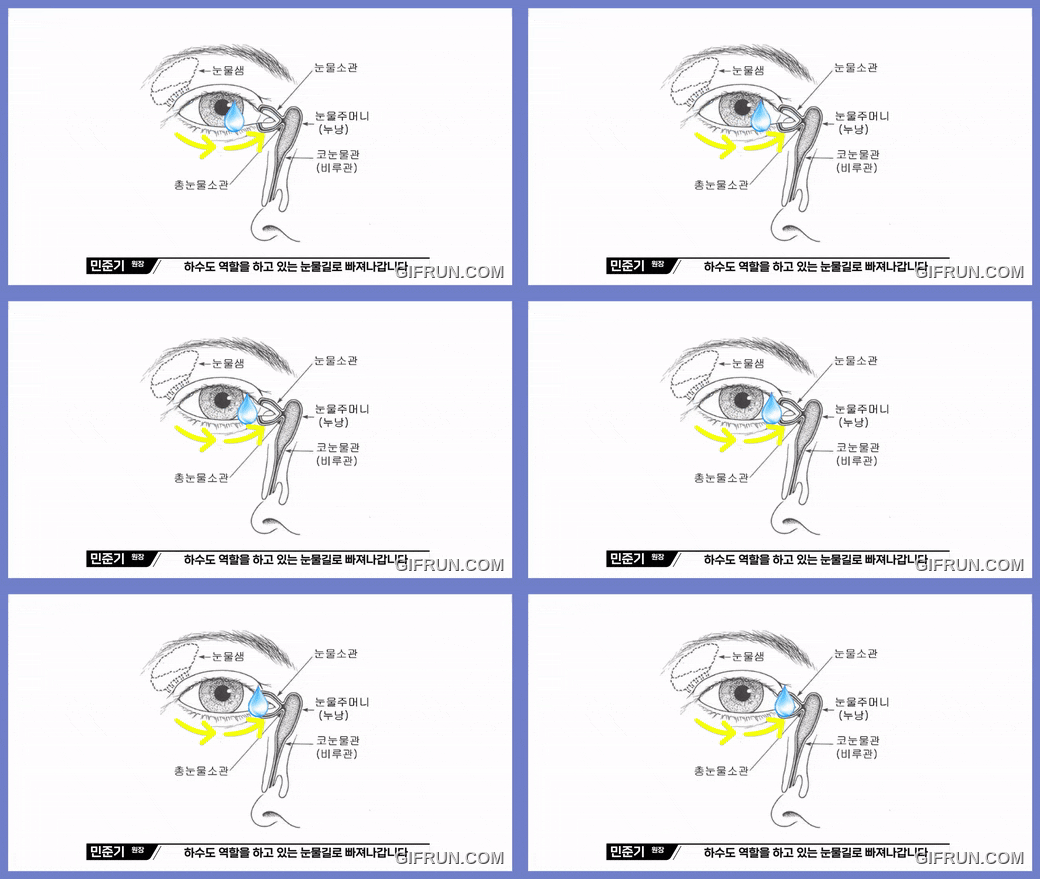
Tears produced by the lacrimal gland spread across the surface of the eye to keep it moist and then pass through the puncta, small openings located near the inner corners of the eyelids.
From there, they travel through the canaliculi and lacrimal sac before draining toward the nose.
To put it simply, if the lacrimal gland acts like a “water supply system,” the drainage pathway leading toward the nose functions like a “sewer system.”
Therefore, when persistent tearing occurs, two possibilities should be considered.
◼ Whether an excessive amount of tears is being produced
◼ Whether the normal drainage pathway has become narrowed or blocked
Having watery eyes does not necessarily mean that too many tears are being produced.
If the drainage pathway is blocked, tears may overflow onto the cheeks even when tear production itself is normal.
✅️ 2. Why Excessive Tear Production Occurs
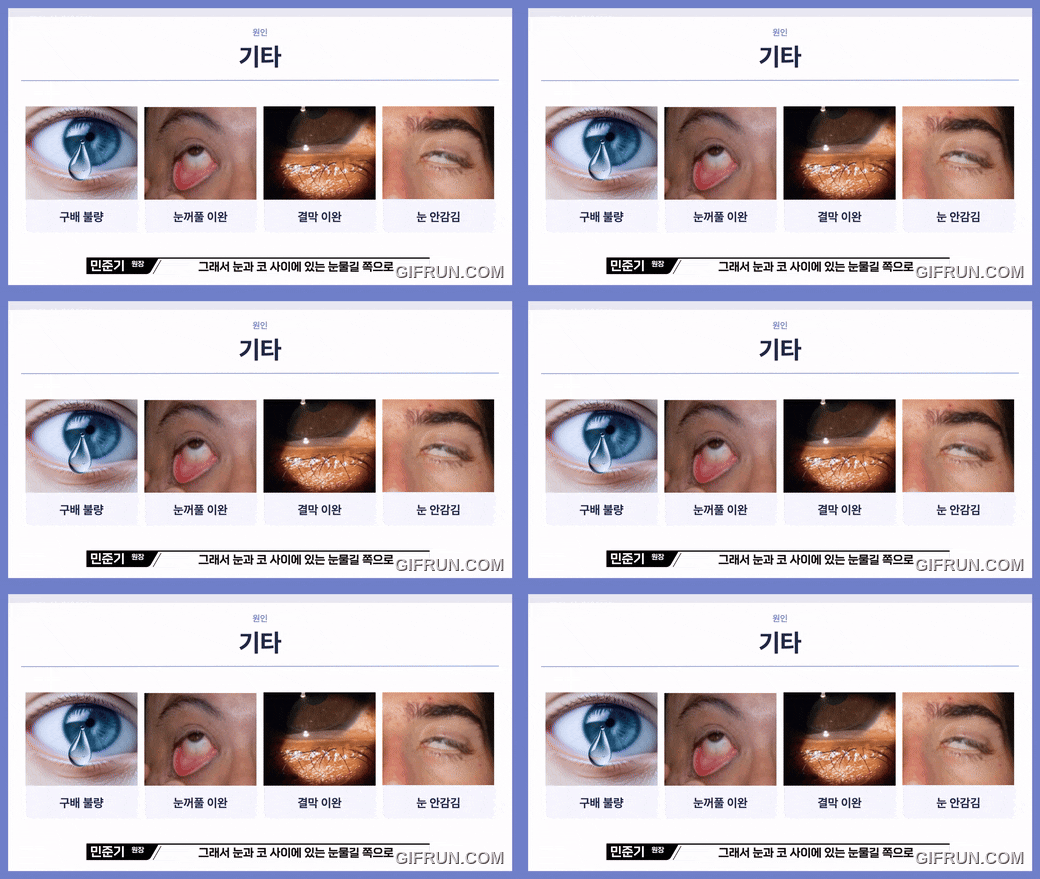
The first possible cause is an actual increase in tear production. One common example is reflex tearing.
When eyelashes rub against the eye, a foreign body enters the eye, or inflammation or injury occurs, tear production may increase as a protective response.
Dry eye syndrome can also be a cause.
When the ocular surface becomes dry, irritation may occur, and the eyes may respond by producing an increased amount of tears as a protective mechanism.
Therefore, watery eyes should not automatically be interpreted as evidence that dry eye syndrome is absent.
Other possible causes include inflammation of the lacrimal gland, certain medications, or facial nerve palsy. If the eyelids do not close properly due to facial nerve dysfunction, ongoing exposure and irritation of the ocular surface may lead to excessive tearing.
In rare cases, abnormal nerve regeneration after facial nerve palsy may cause tearing while eating or even when looking at food. This phenomenon is sometimes referred to as “crocodile tears.”
✅️ 3. Blocked Tear Drainage Can Also Cause Persistent Tearing
Another major cause of excessive tearing is narrowing or blockage of the drainage pathway leading toward the nose.
Near the inner corner of each eyelid is a small opening called the punctum, through which tears normally drain.
If this opening becomes narrowed, tears cannot drain efficiently and may accumulate on the surface of the eye before overflowing.
After passing through the punctum, tears normally travel through the canaliculi and lacrimal sac before reaching the nasal cavity.
| Problem Area | What to Check |
| Punctum | Narrowing or blockage of the drainage opening |
| Canaliculus | Narrowing or obstruction of the drainage channel |
| Lacrimal sac / nasolacrimal duct | Problems affecting drainage toward the nose |
| Lower eyelid | Reduced drainage function due to eyelid laxity |
| Conjunctiva | Interference with tear movement caused by loose or redundant tissue |
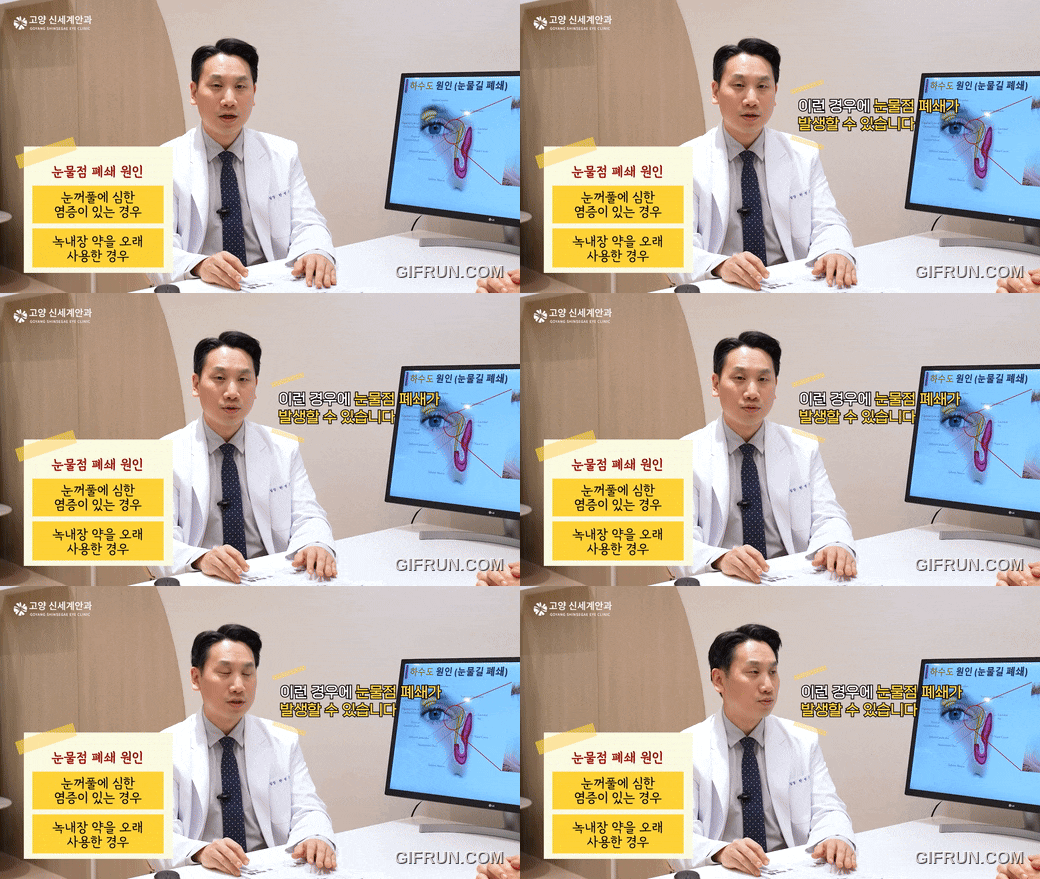
If severe eyelid inflammation has occurred in the past or glaucoma eye drops have been used for a long period of time, the punctum may become narrowed.
Even when there is no complete blockage, excessive laxity of the lower eyelid or redundant conjunctival tissue may interfere with the normal movement of tears toward the drainage opening.
Therefore, treatment methods may differ depending on the exact location of the problem.
✅️ 4. Treatment Options Depend on the Location of the Blockage
If an examination at a Goyang eye clinic confirms obstruction of the tear drainage pathway, treatment is selected according to the location and severity of the blockage.
If the punctum is narrowed or blocked, punctoplasty may be considered.
This procedure widens the drainage opening so that tears can pass through more effectively.
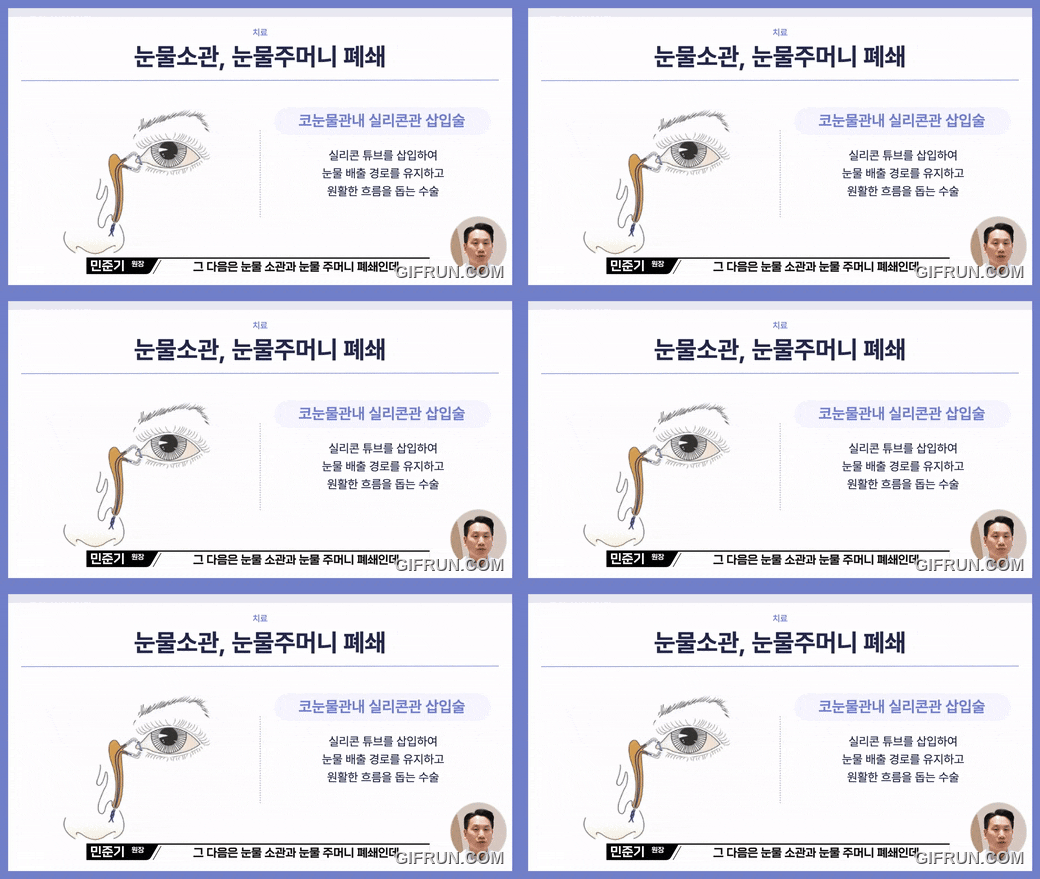
If narrowing is found in the canaliculus, lacrimal sac, or nasolacrimal duct, silicone tube intubation may be considered in selected cases.
With conventional techniques, instruments are inserted through the drainage pathway, and the physician may rely partly on tactile feedback while passing through the narrowed area.
When the narrowing is severe, passage may be difficult, and there is also a possibility that the instrument may deviate from the normal pathway and create a false passage.
If obstruction around the lacrimal sac is severe or cannot be adequately addressed with other methods, endoscopic dacryocystorhinostomy may be considered. This procedure creates a new drainage pathway between the lacrimal sac and the nasal cavity using an endoscope inserted through the nose.
In other words, the same procedure is not applied to every patient.
The location and degree of obstruction should first be identified before choosing an appropriate treatment method.

✅️ 5. When Is Lacrimal Endoscopy Used at a Goyang Eye Clinic?
Lacrimal endoscopy is one method used to directly examine the inside of the tear drainage pathway.
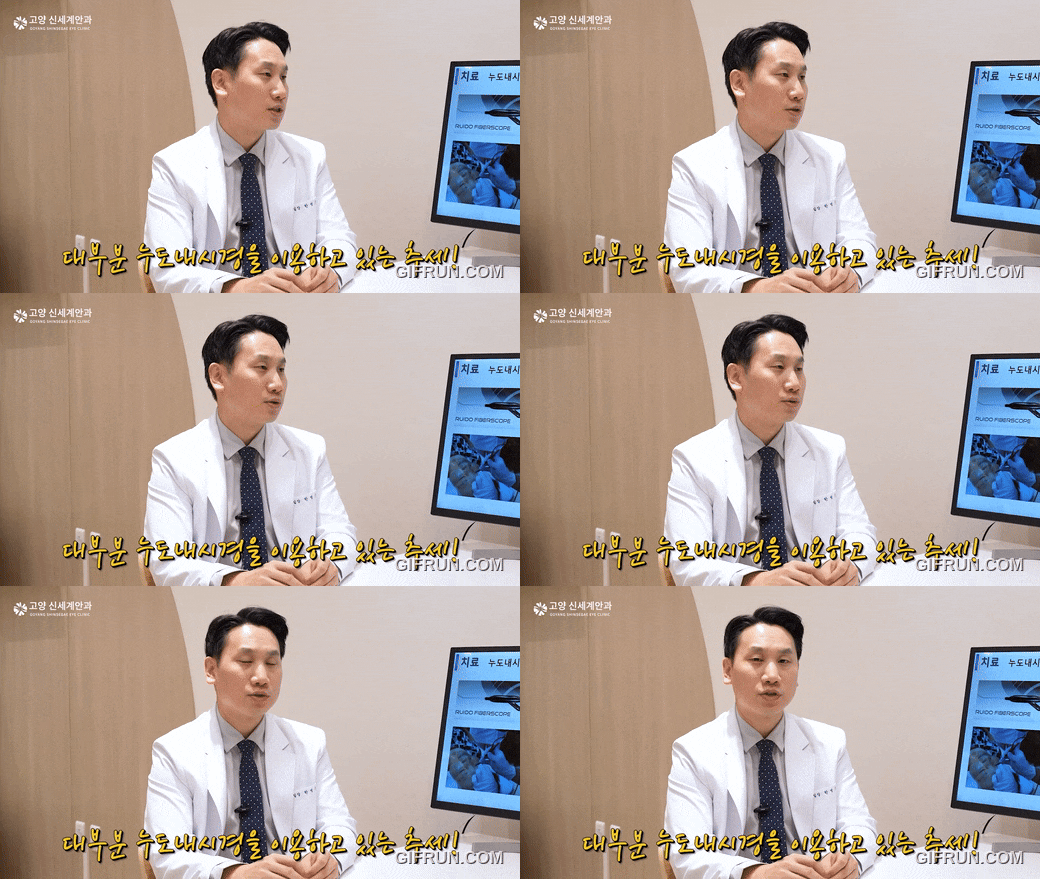
A very small camera, approximately 0.9 mm in diameter, is inserted through the punctum to examine the internal condition of the canaliculi and lacrimal sac.
In conventional procedures, there may be some reliance on the physician’s tactile sensation when advancing an instrument through the drainage pathway.
Lacrimal endoscopy differs in that it allows the physician to directly visualize the inside of the drainage system while identifying the location and condition of any obstruction.
If inflammatory material, stones, or fibrous adhesions are found inside the pathway, the endoscopic tip may also be used to assist with their removal in appropriate cases.
Internal examination → Identification of the blocked area → Assessment of the condition → Appropriate treatment
Frequently Asked Questions
Q. If my eyes keep watering, does that mean I do not have dry eye syndrome?
A. No. Dry eye syndrome can irritate the ocular surface and trigger reflex tear production as a protective response. Therefore, excessive tearing alone cannot determine whether dry eye syndrome is present.
Q. If the tear drainage pathway is blocked, is surgery always necessary?
A. Not necessarily. The appropriate treatment depends on the location and severity of the blockage. A narrowed punctum should be distinguished from obstruction involving the canaliculi or lacrimal sac, and treatment should be selected according to the individual condition.
Q. If my symptoms become worse in winter, is the weather the only reason?
A. Cold wind and dry air can irritate the ocular surface and make tearing more noticeable. However, if tears continuously pool in the eyes or overflow onto the cheeks, dry eye syndrome or abnormalities of the tear drainage pathway should also be evaluated.
✅️ 6. If Tearing Keeps Recurring, Identifying the Cause Comes First
There is no single cause of excessive tearing.
Tear production may increase because of dry eye syndrome or irritation of the ocular surface, while in other cases, the drainage pathway leading toward the nose may become narrowed or blocked, causing tears to overflow.
In particular, if tearing occurs frequently throughout the day and you need to wipe your eyes repeatedly, it should not automatically be attributed to the weather alone.
The first step is to determine whether too many tears are being produced or whether the tears are not draining properly.
Depending on the findings of an examination at a Goyang eye clinic, treatment may involve management of the ocular surface, punctoplasty, silicone tube intubation, lacrimal endoscopy, or dacryocystorhinostomy.
Ultimately, when excessive tearing continues to recur, the key is to identify where the problem is occurring and select a treatment method based on the underlying cause.
Thank you.