

Hello from Goyang Shinsegae Eye Clinic.
It is natural for parents to feel concerned when they hear that their child’s eyesight has suddenly worsened.
We often hear questions such as, “Will glasses be enough?” “Can we slow down the progression of myopia?” and “When should my child start using atropine eye drops or orthokeratology lenses?”
Just as children grow taller, their eyes also change as they develop.
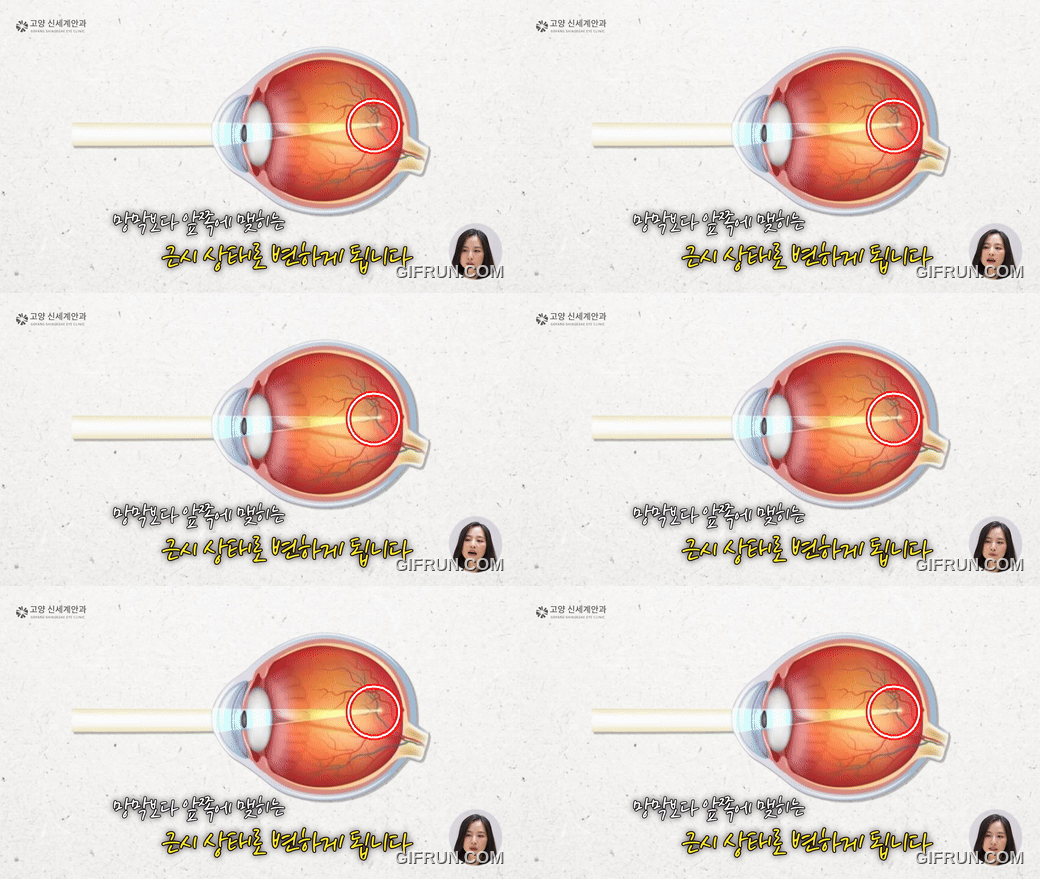
When the eye becomes longer from front to back—a measurement known as axial length—light may focus in front of the retina rather than directly on it, resulting in myopia, or nearsightedness.
For this reason, assessing childhood myopia involves more than checking current vision or the strength of a glasses prescription. It is also important to consider how early myopia began, how quickly it is progressing, and how rapidly the eye’s axial length is increasing.
Contents
✔ How does vision develop as children grow?
✔ Why is childhood myopia management important?
✔ What lifestyle changes can help?
✔ How are atropine eye drops used?
✔ How long should atropine treatment continue?
✔ Can atropine be combined with orthokeratology?
✅ How Does Vision Develop as Children Grow?
Children are not born with fully developed, adult-level vision.
In early infancy, babies begin by recognizing shapes and movement. Over the following months, they start making eye contact and gradually develop depth perception.
Vision continues to improve as children grow, with visual function approaching adult levels during the school years.
The eyes also grow in size.
At birth, the eyes are relatively short from front to back. They lengthen as children grow, but excessive axial elongation can cause light to focus in front of the retina, leading to myopia.
This is why children’s eye examinations should include ongoing monitoring of changes in axial length as well as their prescription.

✅ Why Is Childhood Myopia Management Important?
Myopia is often thought of simply as a condition that makes distant objects appear blurry.
However, as myopia becomes more severe, structural changes in the eye and the long-term risk of various eye diseases also become important considerations.
People with myopia may have approximately eight times the risk of retinal detachment. High myopia is associated with approximately 4.6 times the risk of glaucoma, while very high myopia is associated with approximately 5.5 times the risk of cataracts.
If myopia develops during childhood, it is therefore important to monitor not only current vision but also how quickly the prescription is changing and how much the axial length is increasing.
The earlier myopia begins, the more time it has to progress during a child’s growth years, making close monitoring particularly important.
Regular follow-up may also be appropriate for children who have not yet developed myopia but whose farsightedness is decreasing rapidly or whose axial length is increasing quickly.
✅ What Lifestyle Changes Can Help?
Myopia management involves more than eye drops or lenses.
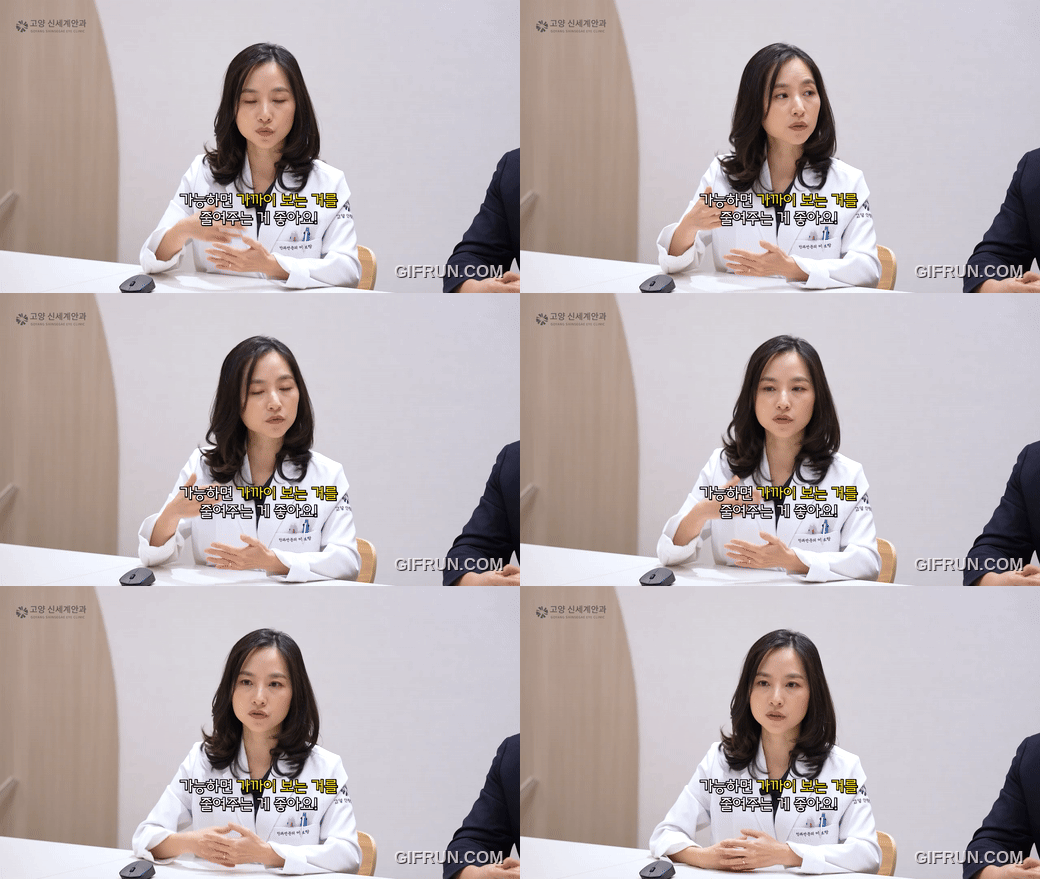
Spending long periods looking at smartphones, tablets, or books at close range can increase eye strain, so regular breaks are helpful.
Where possible, children should avoid continuously viewing objects less than 30 cm away for 30 minutes or longer. Spending approximately two hours outdoors each day can also be beneficial.
Consider the following points in your child’s daily routine:
▪ Does your child hold a smartphone or book too close to their eyes?
▪ Does your child spend long periods doing near work without taking breaks?
▪ Does your child spend enough time outdoors?
▪ Are your child’s vision and axial length being checked regularly?
Even when a child is receiving myopia management, lifestyle adjustments remain helpful if they spend excessive time on near work and too little time outdoors.

✅ How Are Atropine Eye Drops Used?
Atropine eye drops are one option used to slow the progression of childhood myopia.
They may be prescribed at various concentrations, including 0.01%, 0.025%, and 0.05%. Both their effectiveness in slowing progression and the degree of discomfort they cause can vary depending on the concentration.
Because atropine can affect pupil size, some children may experience sensitivity to light or difficulty focusing on nearby objects. Allergic reactions can also occur, although they are uncommon.
If light sensitivity is troublesome, sunglasses or a brimmed hat may help reduce discomfort.

✅ How Long Should Atropine Treatment Continue?
One of the most common questions parents ask is, “How long will my child need to use the eye drops?”
Around the ages of 13 to 15, clinicians may assess whether axial growth is beginning to stabilize.
They may also consider whether the rate of axial elongation has remained sufficiently slow over a period of time when deciding whether treatment can be stopped.
The process of stopping treatment is also important.
After atropine is discontinued, some children may experience a rebound effect, in which myopia begins progressing more rapidly again.
Depending on the concentration being used, clinicians may consider reducing the concentration or the frequency of administration before stopping treatment.
Rather than stopping the eye drops independently, parents should discuss the decision with their child’s eye doctor after regular examinations have confirmed the rate of progression.

✅ Can Atropine Be Combined with Orthokeratology?
Options for childhood myopia management include atropine eye drops, orthokeratology lenses—also known as “Dream Lenses”—daytime contact lenses, and spectacle lenses designed to slow myopia progression.
Because these approaches work in different ways, two or more may be used together depending on the child’s needs.
Examples include combining atropine with orthokeratology or using it alongside glasses or contact lenses.
However, combination treatment is not necessary for every child.
The most appropriate approach should be selected after considering the child’s age, degree of myopia, rate of axial elongation, suitability for contact lens wear, and daily habits.
Managing childhood myopia requires more than looking at a glasses prescription alone.
It involves considering when myopia began, how quickly axial length is increasing, family history, time spent on near work, and outdoor activity, while checking for changes at regular intervals.
There are several management options, including atropine eye drops, orthokeratology, and specialized glasses or contact lenses. An approach that works well for one child may not be appropriate for another.
Because children’s eyes continue to change as they grow, regular vision examinations and axial length measurements are important for monitoring progression and adjusting lifestyle habits and management strategies as needed.
Thank you.