Hello, this is Goyang Shinsegae Eye Clinic.
When considering laser vision correction, patients often have many questions.
In particular, those with severe astigmatism or high myopia frequently wonder whether they are suitable candidates for vision correction surgery.
Many patients also ask whether these procedures can be performed in their 40s or 50s and which option would be most appropriate among LASIK, LASEK, and SMILE.
Recently, interest in 2-Day LASEK has been growing among patients visiting eye clinics in the Haengsin area.
As a result, many people are curious about how this procedure differs from conventional techniques, how it corrects astigmatism, and how much it costs.
Today, we will address frequently asked questions from videos about 2-Day LASEK, covering astigmatism, high myopia, age requirements, differences between surgical techniques, and the role of mitomycin C.

1. Can 2-Day LASEK Correct Astigmatism and High Myopia?
LASEK is a laser vision correction procedure that can treat not only myopia but also astigmatism.
Myopia is corrected by adjusting the refractive power of the cornea, while astigmatism correction involves varying the amount of corneal tissue removed along different meridians according to the astigmatic axis.
One of the most important factors during this process is maintaining accurate eye positioning and alignment while the laser is being applied.
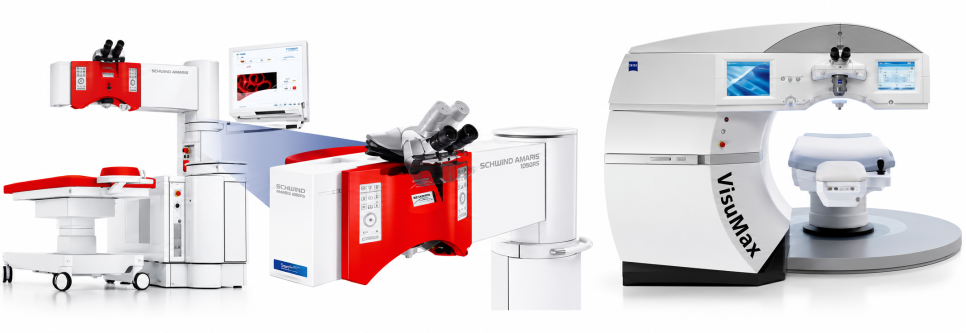
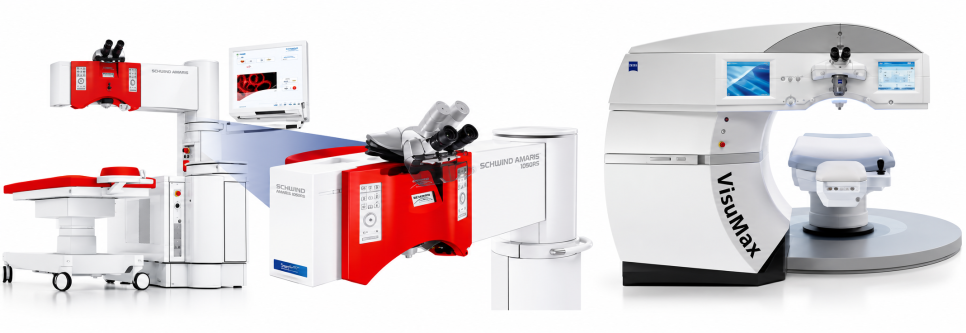
The AMARIS RED laser system features advanced eye-tracking technology that detects subtle eye movements and helps deliver laser energy accurately according to the astigmatic axis.
Astigmatism of approximately 2 to 3 diopters is generally considered significant.
At our eye clinic in the Haengsin area, patients with high astigmatism of approximately 4 to 5 diopters may also undergo a comprehensive examination to determine whether laser vision correction is appropriate.
When suitable, treatment using the AMARIS RED laser system may be considered.

But what about high myopia, such as a prescription of -8.25 diopters?
The higher the degree of myopia, the greater the amount of corneal tissue that generally needs to be removed during laser correction.
In particular, correcting high myopia of approximately -8.25 diopters may require substantial tissue removal, making it essential to assess the thickness of the remaining cornea.
Excessive corneal tissue removal can compromise structural stability and may increase the risk of complications such as myopic regression or corneal ectasia.
Therefore, patients with high myopia must undergo a thorough preoperative evaluation of corneal thickness, corneal shape, estimated ablation depth, and residual stromal thickness.

Corneal Cross-Linking as an Additional Consideration
One additional procedure that may be considered is corneal collagen cross-linking.
Corneal cross-linking uses riboflavin and ultraviolet light to strengthen collagen bonds within the corneal tissue, helping improve its biomechanical stability.
2-Day LASEK performed with the AMARIS RED laser system allows the treatment area and ablation profile to be precisely planned according to each patient’s eye condition.
However, the type of laser system alone does not guarantee minimal tissue removal or eliminate the potential need for corneal cross-linking.
At our Haengsin-area eye clinic, patients with high myopia undergo a detailed assessment of corneal thickness and structural stability.
When clinically indicated, corneal cross-linking may be performed alongside laser vision correction as part of a treatment plan intended to reduce the risk of complications.
Most importantly, the appropriate treatment method should never be determined solely by the degree of myopia.
A comprehensive examination is necessary to establish a safe correction range and select the most suitable approach based on each patient’s individual eye condition.
2. Is Laser Vision Correction Possible in Your 40s or 50s?
Laser vision correction may still be possible for patients in their mid-40s.
Age alone does not necessarily disqualify someone from undergoing the procedure.
If the patient’s refractive error and overall eye condition meet the necessary criteria, treatment may be considered.
However, presbyopia commonly begins during this stage of life.
Therefore, both distance and near vision must be taken into account when planning vision correction.
For patients in their late 50s, it is particularly important to check for cataracts before considering laser vision correction.
A cataract is a condition in which the eye’s natural lens becomes cloudy, usually as a result of aging.
If cataracts have already developed and are affecting vision, cataract treatment may take priority over conventional laser vision correction.
Even if LASIK or LASEK is performed, these procedures cannot eliminate the cloudiness of the natural lens caused by cataracts.
Therefore, patients whose daily activities are affected by cataracts should first undergo an evaluation to determine whether cataract surgery is necessary and when it should be performed.
On the other hand, if cataracts are absent or are not significantly affecting daily life, the ophthalmologist can evaluate the patient’s overall eye health and refractive condition to determine an appropriate treatment approach.

3. Which Is Better: 2-Day LASEK or SMILE?
Corneal Tissue Preservation and Light Sensitivity
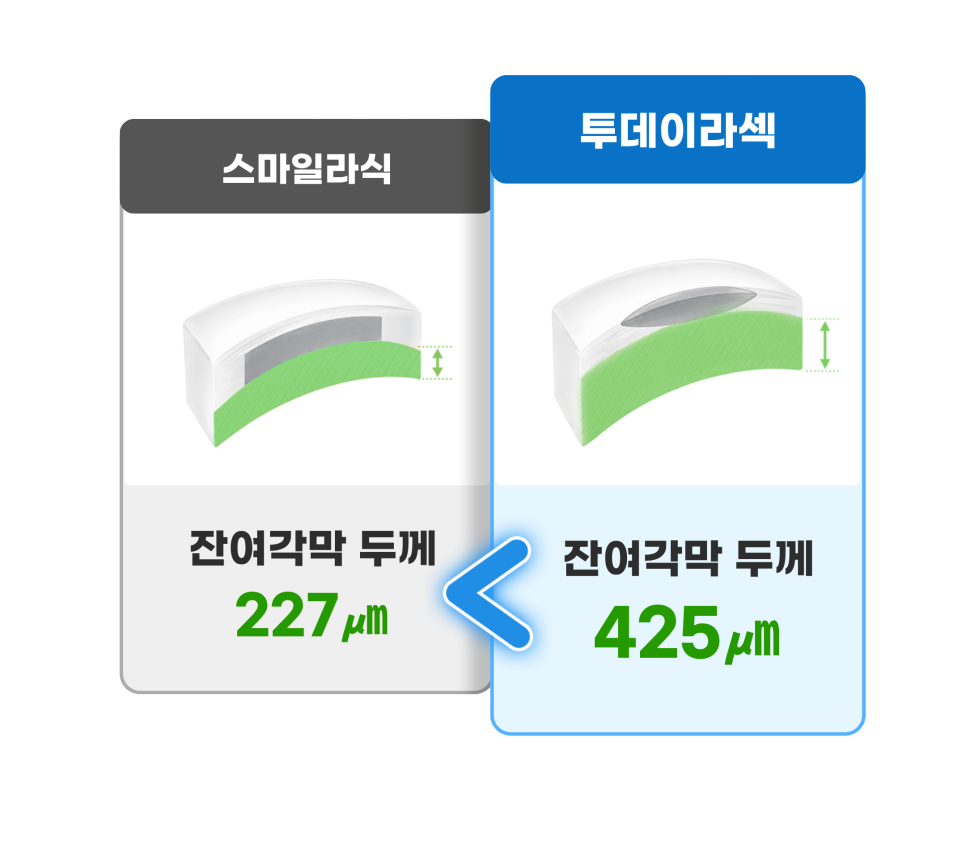
2-Day LASEK is designed to preserve more of the cornea’s anterior structural support compared with certain other laser vision correction techniques.
This may offer advantages in maintaining corneal stability and potentially reducing the risk of complications such as corneal ectasia.
In comparison, SMILE involves creating and removing a lenticule from within the corneal stroma.
The structural effects of these procedures differ, and the potential risks depend on factors such as the patient’s corneal thickness, refractive error, and individual eye characteristics.
Corneal ectasia is a complication in which the cornea progressively weakens and protrudes, potentially causing irregular astigmatism and visual deterioration after refractive surgery.
Stability During Surgery and Treatment Centration
Both LASEK and SMILE require precise alignment of the treatment zone, which is generally centered around an optical area of approximately 6 mm, depending on the surgical plan.
However, patients may experience anxiety or make small involuntary eye movements during the procedure, making accurate positioning essential.
For this reason, many excimer laser systems include advanced eye-tracking technology.
These systems detect eye movements and adjust laser delivery to help maintain accurate treatment centration.
SMILE, on the other hand, generally relies on a suction-based fixation system during laser application rather than the same type of active eye tracking used in excimer laser procedures.
If the patient moves or the suction seal is disrupted during the procedure, a situation known as suction loss may occur.
Some reports have described suction loss rates of approximately 4%, although the actual incidence varies according to the surgical system, technique, and clinical circumstances.
This is one of the procedural risks that should be considered when evaluating the suitability of SMILE.
With 2-Day LASEK, laser technology is used throughout the epithelial removal and corneal reshaping processes.
In contrast, SMILE involves separating and extracting a lenticule from within the corneal stroma.
This additional step introduces procedure-specific risks, including difficulties with lenticule dissection, tissue irregularities, and epithelial ingrowth.
Therefore, the characteristics and potential complications of each technique should be carefully evaluated before deciding on surgery.

Astigmatism Correction
2-Day LASEK may be used to correct both high myopia and significant astigmatism when the patient’s corneal condition meets the necessary criteria.
SMILE can also correct astigmatism, although the achievable correction range and accuracy depend on the laser platform and the patient’s individual refractive condition.
For patients with astigmatism exceeding -2.00 diopters, careful evaluation is particularly important when selecting an appropriate procedure.
The treatment plan should consider the magnitude and axis of astigmatism, corneal characteristics, and the correction range supported by the surgical system.
Postoperative Glare and Halos
With 2-Day LASEK, the optical zone can be adjusted according to the patient’s eye characteristics and treatment requirements.
Planning an appropriate optical zone may help reduce postoperative visual disturbances such as glare and halos.
SMILE also requires careful optical zone planning, although the available adjustments depend on the specific surgical platform and treatment design.
Postoperative glare and halos can occur after either procedure.
Their likelihood and severity may vary depending on pupil size, optical zone diameter, residual refractive error, healing response, and individual eye characteristics.
Surgical Costs
The cost of 2-Day LASEK may start in the lower range of KRW 1 million, whereas SMILE surgery may cost approximately KRW 2 million to KRW 4 million, depending on the medical institution and treatment conditions.
One factor contributing to the cost difference is the equipment and disposable materials used during the procedure.
SMILE surgery requires a specialized laser system and a disposable patient interface used to stabilize the eye during treatment.
Depending on the equipment and associated operating expenses, these materials can contribute to the overall surgical cost.
Some cost comparisons cite equipment-related expenses ranging from approximately KRW 1 million to KRW 3 million, although actual disposable material costs vary and should not be assumed to equal this entire amount.
These expenses are reflected in the overall pricing structure offered to patients.
In comparison, 2-Day LASEK generally involves lower disposable material expenses, which may contribute to a more affordable treatment cost.
For example, saving approximately KRW 2 million on vision correction could leave enough room in your budget for a three-night, four-day overseas trip.
However, treatment decisions should be based primarily on safety, suitability, and expected visual outcomes rather than cost alone.
4. Is 2-Day LASEK a Well-Established Procedure?
The all-laser surface ablation technique used in 2-Day LASEK is based on technology that has been used in ophthalmology for many years.
In some conventional LASEK procedures, the corneal epithelium is removed using alcohol or mechanical techniques before laser treatment is applied to reshape the underlying corneal tissue.
In contrast, the all-laser approach uses laser technology for both epithelial removal and stromal reshaping.
This technology has been used in clinical practice for more than a decade, and considerable research and clinical experience have accumulated regarding laser-based surface ablation procedures.
In particular, the AMARIS RED laser system incorporates eye-tracking technology designed to respond to eye movements during laser application.
This feature plays an important role in helping deliver laser energy to the intended treatment area with precision.
However, the term “2-Day LASEK” itself does not guarantee a specific recovery period or a completely risk-free procedure.

Visual recovery requires regeneration of the corneal epithelium, and patients may experience varying degrees of discomfort, light sensitivity, glare, halos, or dry eye symptoms during the healing process.
Furthermore, surface ablation may not be appropriate for patients with extremely high myopia or insufficient corneal thickness.
Therefore, a comprehensive preoperative assessment is essential.
This typically includes corneal topography, pachymetry to measure corneal thickness, and refraction testing to evaluate the patient’s refractive error.
Confirming eligibility through detailed examinations and selecting an appropriate surgical technique are essential steps toward achieving safe and satisfactory visual outcomes.
Thank you for reading.