Hello, this is Goyang Shinsegae Eye Clinic.
“Will my child be able to see clearly the very next day after starting Ortho-K lenses?”
If you are a parent looking for a pediatric eye clinic in Ilsan because of your child’s myopia, you may be wondering not only about the cost but also how effective Ortho-K lenses can be.
Because Ortho-K lenses can involve a relatively significant financial commitment, many parents carefully consider the decision before starting treatment.
However, something just as important as the expected results is understanding the daily care these lenses require.
Because Ortho-K lenses are worn overnight, oils, proteins, and other substances naturally produced by the eyes can accumulate on the lens surface.
If these deposits are not properly removed, they may irritate the eyes and can also affect safe long-term lens wear.
For this reason, learning how to wear, remove, clean, and store Ortho-K lenses correctly is just as important as evaluating their effectiveness.

- Why Is Daily Care Important Before Evaluating the Results?
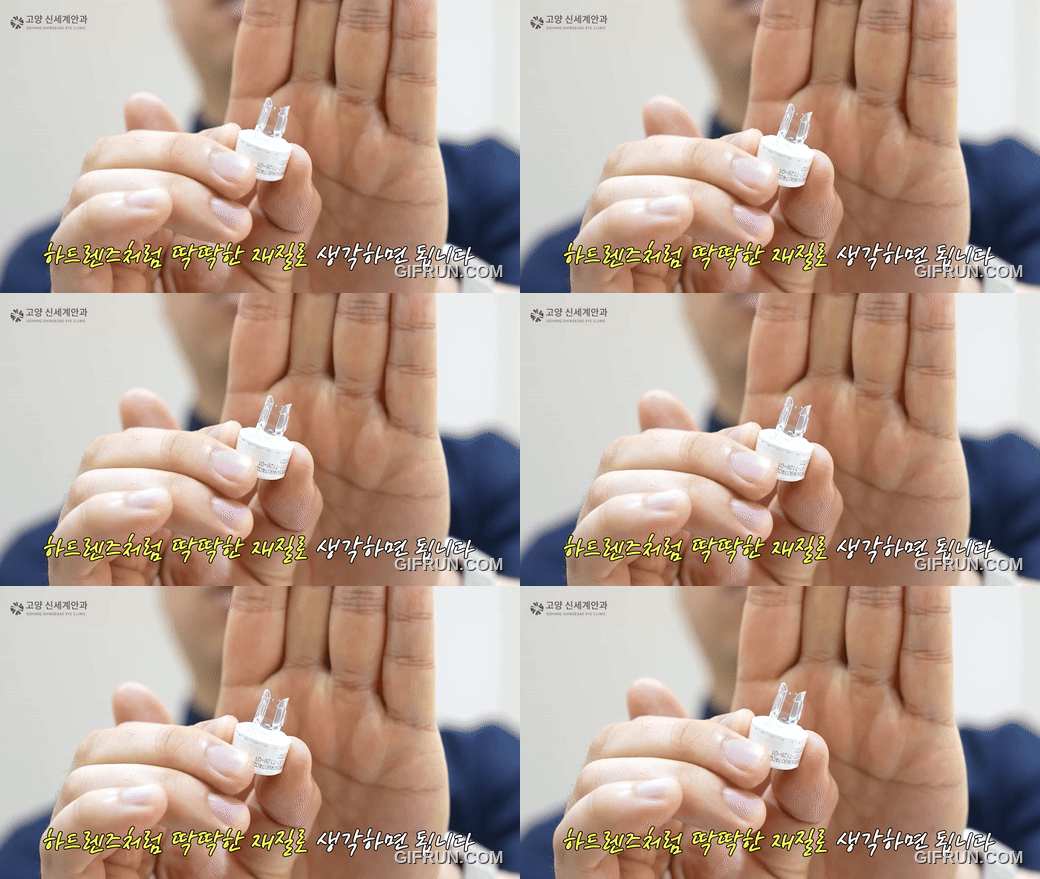
Ortho-K lenses are smaller than typical soft contact lenses and are made of a firm, rigid gas-permeable material.
Because they are placed directly on the eyes every night, they should be carefully cleaned after each use and stored in fresh lens care solution.
The basic routine is to clean the lenses thoroughly every day, discard the used solution, and refill the case with fresh solution before storing them.
Parental supervision is especially important when young children use Ortho-K lenses.
Elementary school-age children may have difficulty controlling the amount of pressure they apply while cleaning the lenses, which can increase the risk of damage or breakage.
Until the child becomes familiar with proper lens care, it is generally helpful for a parent to clean the lenses directly or supervise the process closely.
The effectiveness of Ortho-K treatment should also not be evaluated solely by how clearly the child can see.
It is equally important to check whether the lenses fit properly, whether the child experiences any discomfort, and whether there are any changes or problems affecting the eyes.
- What Should You Prepare Before Cleaning Ortho-K Lenses?
When a child first begins using Ortho-K lenses at a pediatric eye clinic in Ilsan, one of the most important habits to learn is washing the hands thoroughly before handling the lenses.
Wash your hands carefully with soap and running water, and keep your fingernails short.
Long fingernails can scratch the lens surface or accidentally damage the lens during cleaning.

Another important precaution is to close the sink drain before handling the lenses.
Because Ortho-K lenses are small, they can easily slip from the fingers and fall into the drain.
Close the drain plug first and, if necessary, use an additional drain cover or rubber mat to further reduce the risk of losing a lens.
| Step | Lens Care Method | What to Check |
| ① | Wash hands thoroughly | Keep fingernails short |
| ② | Close the sink drain | Prevent accidental loss |
| ③ | Apply the recommended lens cleaner | Use approximately 2–3 drops |
| ④ | Clean the lens in the palm of your hand | Gently rub both sides for about 30 seconds |
| ⑤ | Rinse thoroughly | Make sure all cleaning solution is removed |
| ⑥ | Store in fresh solution | Do not reuse old storage solution |
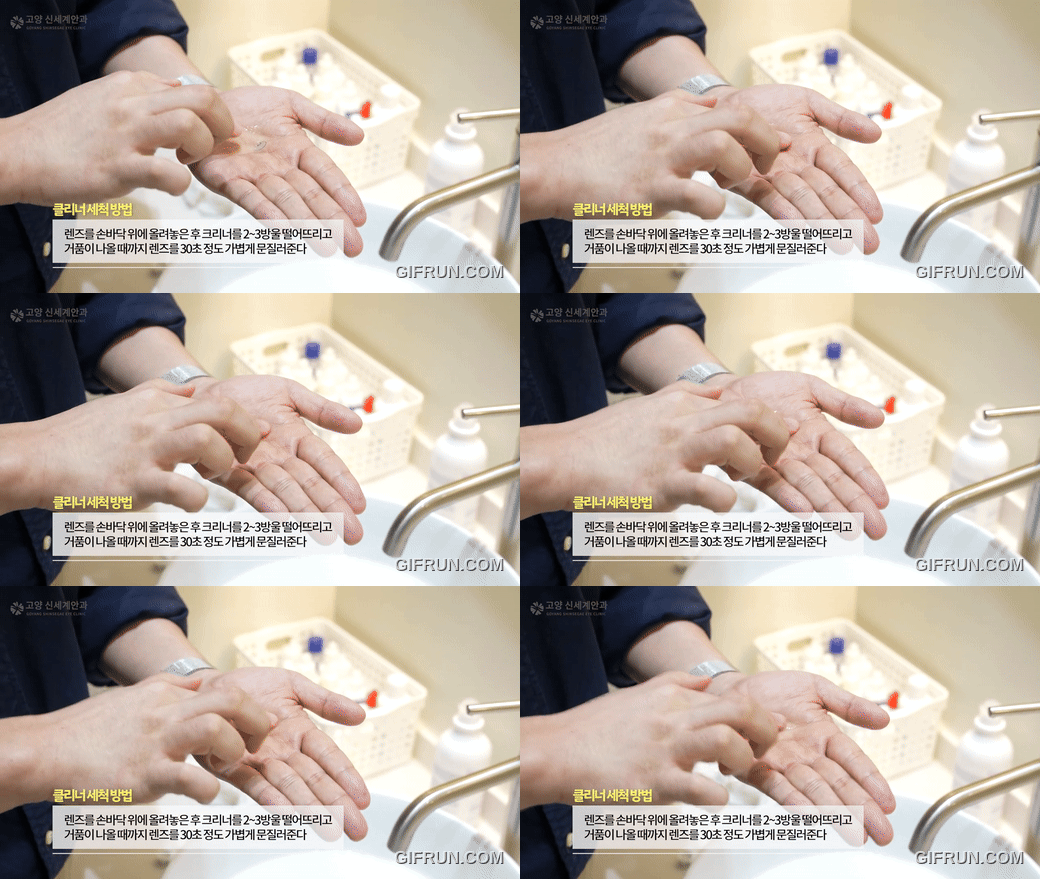
Apply approximately two to three drops of the recommended cleaner, place the lens in the palm of your hand, and gently rub both sides for about 30 seconds.
Avoid applying excessive pressure.
Even though Ortho-K lenses are made from a relatively firm material, too much force can still cause them to crack or break.
- Always wash your hands before handling the lenses.
- Keep your fingernails short.
- Close the sink drain before cleaning.
- Gently clean both sides of the lens.
- Rinse the lenses thoroughly.
- Discard the used storage solution and replace it with fresh solution.
Once the final rinse is complete, place the lenses in clean, fresh storage solution.
If saline solution is used as part of the recommended care routine, it should also be handled hygienically and used within the recommended period after opening rather than being kept for an extended period.
3) If the Lenses Are Properly Cared For, Will the Ortho-K Effect Appear Immediately?
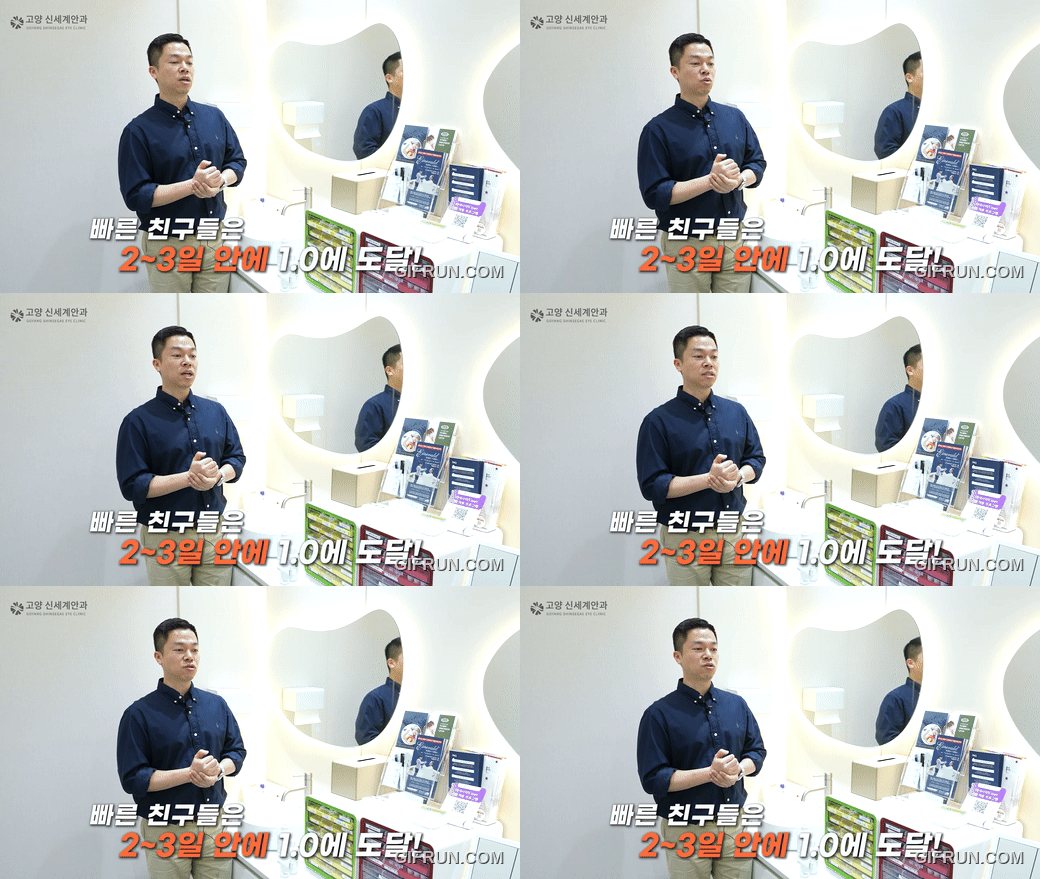
Children who adapt relatively quickly may approach their target daytime vision within approximately two to three days after beginning Ortho-K wear.
However, children with higher degrees of myopia or astigmatism may require more time to reach their target level of vision.

Many children are also initially afraid of putting a lens on the eye.
This is a natural response because they may instinctively close their eyes when they see the lens approaching.
Practicing lens insertion while looking directly at their own eye in a mirror may help.
Although the first few days can be challenging, some children gradually gain confidence once they experience clearer daytime vision after wearing the lenses overnight.
Over time, they may also become more comfortable with inserting and removing the lenses.
Therefore, during follow-up visits at a pediatric eye clinic in Ilsan, it is important to assess more than just how many days it took for the child to see clearly.
The child’s degree of myopia or astigmatism, lens fit, wearing pattern, and overall eye condition should also be evaluated.
4) What Should You Do If the Lens Is Difficult to Remove?
Sometimes an Ortho-K lens may not come off immediately when using a lens removal suction tool.
Rather than repeatedly pulling on the lens with force, apply a sufficient amount of lubricating eye drops and try again.
If the lens is difficult to remove from the center of the cornea, placing the suction tool slightly off-center may sometimes make removal easier.
However, if the child experiences pain or you cannot identify the location of the lens, avoid repeatedly touching the eye and visit an eye clinic for evaluation.
Q. Can an Ortho-K lens move behind the eye?
A. No. Because of the anatomy of the eye, a contact lens cannot move behind the eyeball and disappear.
The lens may shift away from the center of the cornea and move upward, downward, or toward either side, making it seem as though it has disappeared.
However, the conjunctiva forms a continuous barrier around the eye, preventing the lens from traveling behind the eyeball.
If the lens is no longer visible over the cornea, or the dark central part of the eye, do not panic.
Ask your child to look left, right, up, and down while carefully checking whether the lens has moved beneath the eyelid or toward one side.
If you cannot locate or remove the lens safely, visit an eye clinic for assistance rather than repeatedly trying to remove it at home.
Q. Is it okay for a young elementary school child to clean Ortho-K lenses alone?
A. Young children may have difficulty controlling the amount of pressure they use and may be more likely to drop or damage the small lenses.
At first, it is generally better for a parent to handle the cleaning process.
Once the child becomes familiar with proper lens care, the steps can be taught gradually under parental supervision.
5) Why Should Ortho-K Lenses Be Examined and Fitted at Goyang Shinsegae Eye Clinic?
An ophthalmologist directly evaluates the measurements of the child’s eyes and determines the appropriate lens curvature and prescription.
A variety of Ortho-K brands and lens designs are available, allowing the fitting process to be individualized according to each child’s eye measurements and refractive condition.
Our staff members help create a comfortable environment at the child’s eye level, which can make the fitting and lens-wearing process easier for children who may initially feel anxious about contact lenses.
A complimentary trial period allows families to experience Ortho-K wear for one week before deciding whether the child can adapt to the lenses and whether the expected visual correction can be achieved.
Ortho-K treatment does not end once the lenses have been fitted.
Regular follow-up examinations are important after lens wear begins to ensure that the eyes remain healthy and that the lenses continue to fit appropriately.
Initial follow-up visits may be scheduled approximately three days, one week, and one month after beginning lens wear, followed by examinations at intervals of around three months.
However, the actual follow-up schedule may vary depending on the condition of the child’s eyes and their response to Ortho-K treatment.
Thank you.