

Hello, this is Goyang Shinsegae Eye Clinic.
Around the mid-40s, some people begin searching for an eye clinic near Wonheung Station because text messages on their phones or words in books no longer appear as clear as they once did.
At first, it is easy to assume that these changes are simply due to eye fatigue or poor physical condition.
However, if you need to hold your phone farther away than before to read comfortably, or if your eyes take longer to refocus when shifting your gaze from a nearby object to something in the distance, it may be helpful to determine whether these changes are related to presbyopia.

1. Why Does Presbyopia Occur?
Presbyopia is an age-related condition in which the eye gradually loses its ability to focus clearly on nearby objects due to decreased accommodative ability.
The crystalline lens inside the eye plays an important role in adjusting the refractive power needed to focus on objects at different distances.
When we are younger, the lens is relatively flexible and the focusing mechanism works efficiently, allowing the eyes to adjust focus quickly.
As we age, however, the lens gradually becomes less flexible, and changes also occur in the structures involved in accommodation.
As a result, the ability to focus on nearby objects decreases.
This may make small print more difficult to read and may cause people to hold books or smartphones farther away than they used to.
2. Symptoms That May Occur With Presbyopia
Before visiting an eye clinic near Wonheung Station, it may be useful to check whether you are experiencing any of the following changes in your daily life.
✔ Small print at close range appears blurry.
✔ You need to hold books or smartphones farther away to read comfortably.
✔ It may feel difficult to shift focus between near and distant objects.
✔ Your eyes may become more fatigued after prolonged reading or computer use.
✔ Extended near work may cause eye strain or headaches.
Because presbyopia primarily involves an age-related decline in the ability to focus at close range, it is important to evaluate both your symptoms and your current refractive status.
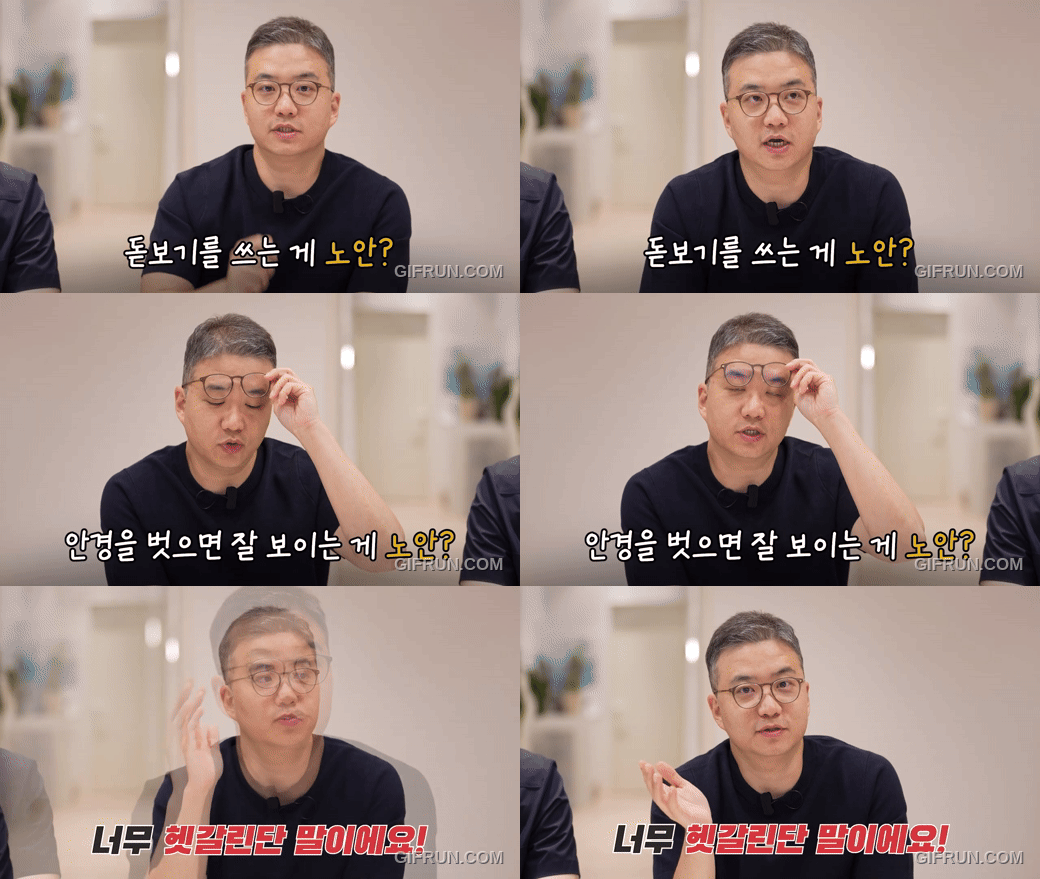
3. What Is the Difference Between Presbyopia and Cataracts?
Presbyopia is an age-related decline in the eye’s ability to accommodate and focus on nearby objects.
A common symptom is difficulty reading small print at close range or discomfort during near work.
Cataracts, on the other hand, occur when the normally clear crystalline lens becomes cloudy.
Depending on the location and severity of the lens opacity, symptoms may include blurred or hazy vision, glare, halos around lights, and reduced contrast sensitivity.
In some cases, changing the prescription of glasses may no longer provide the same level of visual clarity as before.
Therefore, if difficulty reading at close range is accompanied by persistent overall blurred vision or glare, it is advisable not to assume that the symptoms are caused by presbyopia alone.
An eye examination at a clinic near Wonheung Station can help determine whether cataracts are also present.

4. What Is Presbyopia-Correcting Multifocal Cataract Surgery?
Cataract surgery involves removing the clouded natural lens and replacing it with an artificial intraocular lens, or IOL.
A conventional monofocal intraocular lens is designed to provide focus at a specific distance.
For example, if the lens power is selected to prioritize distance vision, reading glasses or other near-vision correction may still be needed after surgery.
Multifocal or extended depth-of-focus (EDOF) intraocular lenses used in presbyopia-correcting cataract surgery are designed, depending on their optical characteristics, to reduce dependence on glasses not only for distance vision but also for intermediate or near vision.

5. How Is Cataract Surgery Performed?
Cataract surgery is generally performed under topical anesthesia using anesthetic eye drops.
A small incision of approximately 2 to 2.8 mm is made in the cornea to access the lens capsule.
Phacoemulsification is then used to break the clouded lens into small fragments, which are subsequently removed.
After the natural lens has been removed, an intraocular lens with a power calculated according to the individual condition of the patient’s eyes is inserted.
Because the surgical method and type of intraocular lens may vary depending on each person’s eye condition, a detailed preoperative examination is necessary before determining the appropriate treatment plan.

6. Precautions After Surgery
First, any prescribed eye drops should be used according to the dosage and duration recommended by your ophthalmologist.
During the recovery period, avoid rubbing your eyes or applying strong pressure to them.
Immediately after surgery, strenuous exercise should be avoided. Activities such as swimming or using a sauna should also be temporarily restricted because they may irritate the eyes or increase the risk of infection.
In addition, rather than stopping prescribed eye drops on your own or postponing scheduled follow-up visits, it is important to attend your ophthalmic examinations as instructed so that the healing process can be properly monitored.
If you are considering presbyopia-correcting multifocal cataract surgery at an eye clinic near Wonheung Station, it is important to look beyond the surgical technique or type of intraocular lens alone.
Your current eye condition, daily visual needs, lifestyle, and postoperative precautions should all be carefully considered before surgery.